Farmers are speaking out in support of California’s Proposition 12. This week farmers from around the United States are flying in to Washington D.C. to show their support for Prop 12. Independent farmers have been left out of the debate for far too long. Their voices weren’t even invited to testify before Congress on a recent Prop 12 hearing. Now, with this effort, they are making their voices heard.
Proposition 12 — California’s landmark farm-animal welfare law — is about one plain principle: animals raised for food should not be warehoused in tiny metal cages for their entire lives.
Passed by California voters seven years ago back in 2018, Prop 12 sets minimum space standards for breeding pigs, egg-laying hens and veal calves and prohibits the sale in California of products from animals kept in extreme confinement.
The measure has already changed how many producers raise animals and opened a market for higher-welfare products — but it is under renewed attack in Congress as part of debates around the federal Farm Bill.
What exactly is Prop 12 — and why it matters for farm animals
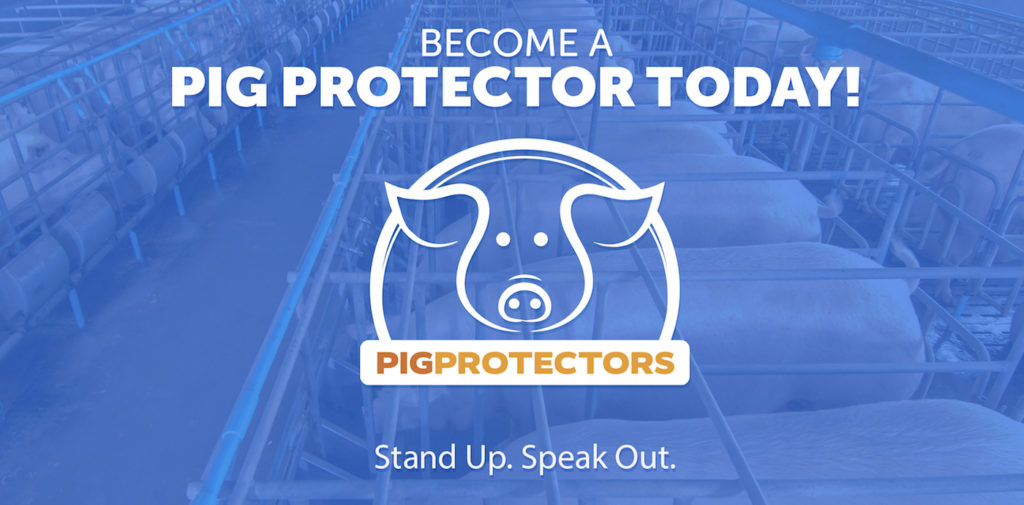
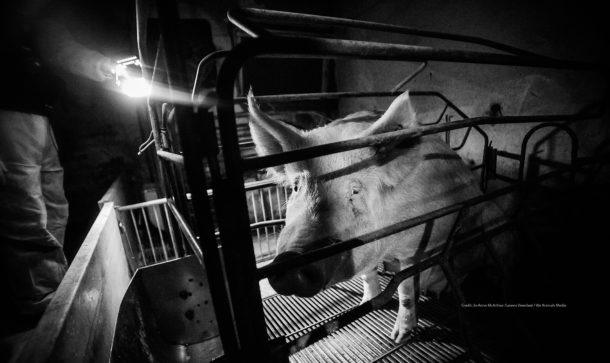
Prop 12 requires that certain farm animals be provided minimum amounts of space and forbids the sale in California of pork, veal, and eggs from animals confined in ways that don’t meet the law’s standards. For breeding pigs, the law effectively bans the use of gestation crates — small, individual metal stalls in which sows can be confined for weeks or months at a time — because those systems fail to meet the required usable floor space per animal.
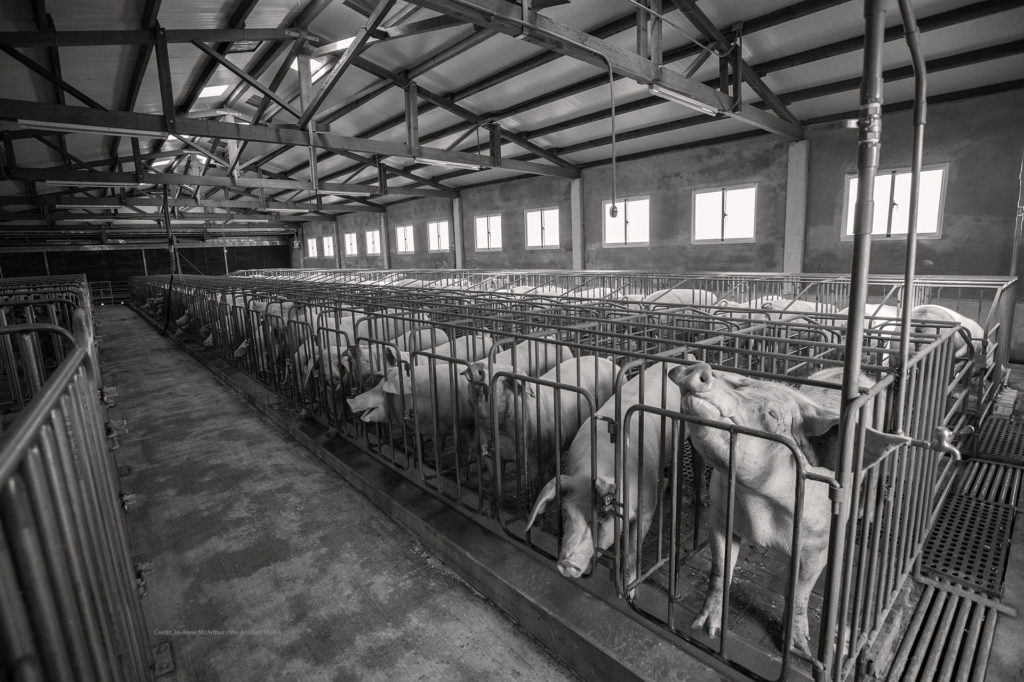
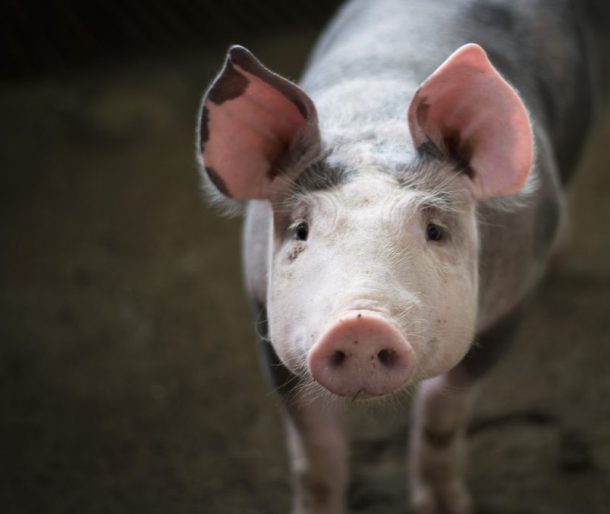
Credit – Jo-Anne McArthur | We Animals Media
The law also sets space requirements for laying hens and veal calves. These rules apply to products sold in California regardless of the state where the animal was raised, meaning producers who want access to California’s large market must comply.
Why does space matter? Scientific research and decades of veterinary experience show that extreme confinement causes physical harm and psychological stress: sows in gestation crates can’t turn around, socialize, or exercise, which increases injuries, repetitive behaviors, and health problems.
Prop 12’s standards are aimed at ending these kinds of cruel confinement systems and encouraging housing that allows more natural movement and social behavior. Advocacy groups and many veterinarians view the measure as a meaningful step toward more humane livestock production.
The law has withstood major legal tests — but now it’s politically vulnerable
Prop 12 survived a high-stakes constitutional challenge that reached the U.S. Supreme Court. In National Pork Producers Council v. Ross the court affirmed that California could enact and enforce standards like Prop 12, a major victory for state-level animal welfare regulation and for advocates who see ballot measures as an engine for reform. That decision confirmed that states can set standards for products sold within their borders — even when most of that supply comes from other states.
Even with that legal victory, Prop 12 is not immune to political attack. Members of Congress have floated language to weaken or preempt state animal welfare laws inside the federal Farm Bill — the massive piece of legislation that funds agriculture policy and programs.
In 2025, House Republicans and industry lobbyists pushed proposals described as ensuring “the free movement of livestock-derived products in interstate commerce,” which critics say would carve out an exemption to California’s rules and other state-based standards. In plain terms: instead of the courts deciding constitutionality, Congress could write federal law that overrides state rules — effectively nullifying Prop 12’s reach.
Who is pushing to overturn or “fix” Prop 12 — and why
The most visible opponents are large pork industry groups and allied agricultural trade organizations. The National Pork Producers Council (NPPC) and the American Farm Bureau Federation were central plaintiffs in the court challenges and have led lobbying efforts urging Congress to “fix” Prop 12 — arguing that it imposes burdens on interstate commerce and makes it harder for producers outside California to sell into that market. Corporate processors and some large-scale producers argue they face significant costs to retrofit barns and systems to comply.
But it’s not a simple “farmers vs. activists” story. The pork industry is not monolithic: many independent or smaller hog farmers have already shifted to higher-welfare systems and see market opportunities from Prop 12’s premium for compliant pork. Meanwhile, some producer groups emphasize the regulatory costs and supply-chain challenges for very large operations that have built infrastructure around confinement systems. That mix of claims has fed a concerted lobbying campaign to include Prop 12-weakening language in the Farm Bill.
Why Prop 12 is good for small and independent farmers
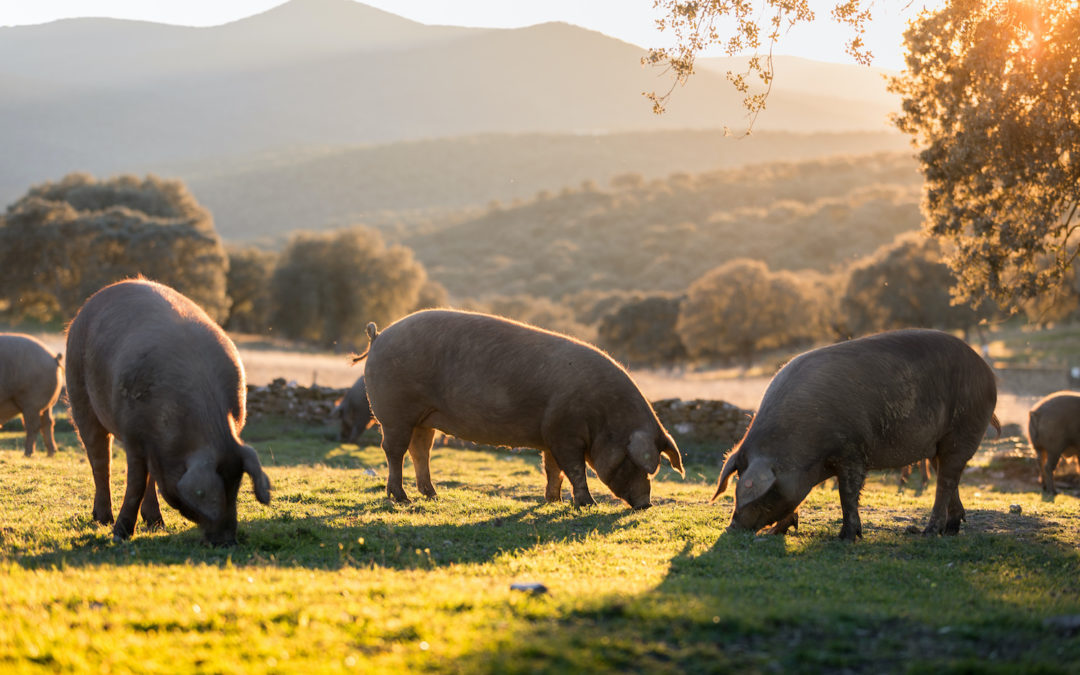
A key, often-overlooked point is that Prop 12 has created market opportunities for smaller, independent hog farmers. By setting a statewide standard, Prop 12 effectively rewards producers who already meet higher-welfare standards with access to California’s consumer market — often at a premium price. Independent farmers who raise animals outdoors or in group housing can compete on welfare and quality, instead of being undercut by an industrial model that depends on confinement. Farm advocates argue this helps diversify the supply chain, strengthens local and regional systems, and reduces the market power of vertically integrated corporate processors.
From a resilience perspective, diversified smaller farms are less likely to be wiped out by a single supply-chain disruption; they also keep money in rural communities and can respond more nimbly to consumer demand for higher-welfare products. For farmers who have already invested to comply, rollback efforts risk wasting sunk costs and undermining predictability — the opposite of what stable markets need.
What Farm Action Fund is doing — and how you can help
Farm Action Fund is a farmer-led political organization that’s been active in defending Prop 12 and educating lawmakers about its benefits for independent farmers and public health. Their work spans grassroots mobilization, farmer testimony in Washington, D.C., and digital advocacy urging Congress to reject efforts to override state animal welfare standards in the Farm Bill.
Recent Farm Action Fund campaigns have highlighted stories of independent hog farmers who say Prop 12 opened new market opportunities and improved farm viability.
Specifically, Farm Action Fund has:
- Organized independent hog farmers to bring their voices to D.C. and to congressional staffers, showing that not all producers oppose Prop 12.
- Launched public calls to action asking supporters to tell their members of Congress to reject Farm Bill language that would preempt state standards.
- Framed the issue as one of states’ rights, consumer choice, and fair competition for family-scale producers — arguing that federal preemption would empower corporate processors at the expense of local farmers and voter-backed standards.
If you support humane farming, there are practical steps you can take: contact your members of Congress and tell them to oppose provisions that would undercut Prop 12; amplify farmers’ stories who benefit from higher-welfare markets; and support organizations doing on-the-ground outreach and legal defense.
Farm Action Fund’s website contains action pages and farmer profiles you can use to learn more or join their campaigns.
Addressing the common counterarguments
“Prop 12 is unconstitutional / violates interstate commerce.”
The Supreme Court’s decision in National Pork Producers Council v. Ross affirmed the law’s constitutionality, making clear that states can regulate products sold in their markets to protect public values — including animal welfare. That legal precedent weakens the constitutional argument, though political efforts remain to enact preemptive federal law.
“It will bankrupt farmers or sharply raise consumer prices.”
Estimates of compliance costs vary, and many large producers have already begun complying. Reports so far show limited consumer price impact in most cases, and for many independent farmers Prop 12 has meant access to a higher-value market. Moreover, animal welfare improvements can reduce disease risk and improve product quality — outcomes that can benefit the supply chain as a whole.
“Federal law should set one national standard.”
A reasonable conversation can be had about national standards — but it should not be a cover for rolling back protections where they already exist or for stripping states’ ability to respond to their voters. A democratic pathway is to raise standards nationwide, not to preempt stricter state laws in favor of weaker federal text crafted under industry pressure.
Farm Action Fund and many advocates argue a better outcome would be federal support for humane transitions, technical assistance, and incentives for farmers — rather than an exemption that undermines voter-backed protections.
Bottom line: Prop 12 protects animals — and farmers — from consolidation and cruelty
Prop 12 is more than an animal-welfare policy; it’s a market reshape that rewards humane practices and gives family-scale farmers a fairer shot at competing. The law has survived a Supreme Court challenge and is already changing production systems, but its protections are vulnerable to Farm Bill language pushed by the pork industry and congressional allies who want to limit the reach of state-level welfare standards. Groups like Farm Action Fund are working in Washington and with farmers to defend Prop 12 — arguing that humane treatment of animals, consumer choice, and the survival of independent farms should not be undermined by federal preemption written under industry pressure.
If you believe in humane treatment for farm animals and a food system that supports small farms, now is the time to make your voice heard. Contact your representatives, share farmer stories, and support organizations who are fighting to keep Prop 12’s protections in place. The future of farm animal welfare — and the economic health of independent farmers — may depend on it.