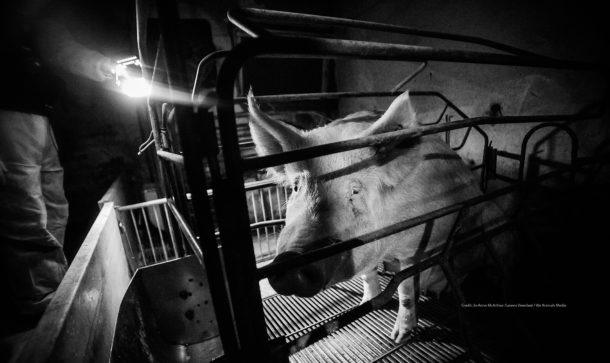
At Crate Free USA, we’re dedicated to making life better for animals raised for food. We recognize that most Americans still include meat in their diets, which is why we believe one of the most meaningful steps people can take right now is to support local farmers who treat their animals with care and respect — not the massive factory farms and corporations that dominate so much of today’s food system. While we encourage reducing overall meat consumption, we also champion farmers who are raising animals in more humane and sustainable ways. To us, real progress happens when we offer practical, achievable choices — not all-or-nothing ultimatums.
If you’re in Illinois, it’s simple to connect with a local, sustainable farmer near you.\
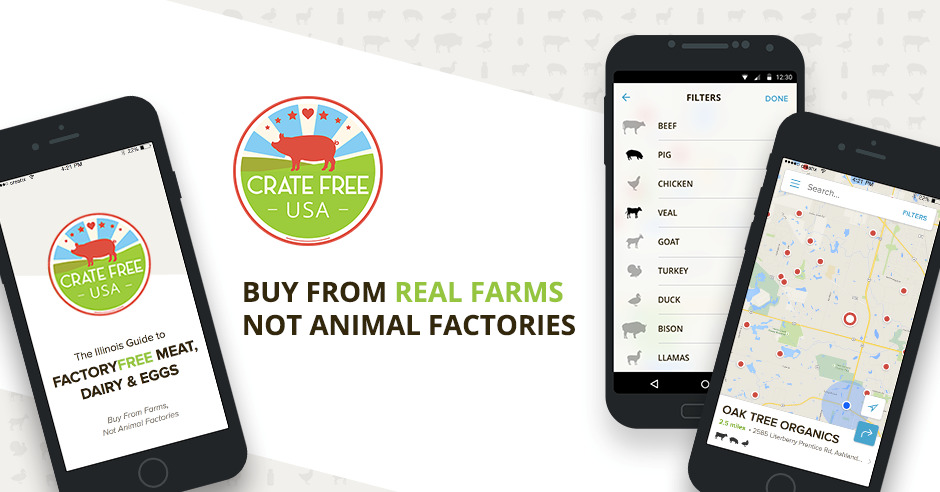
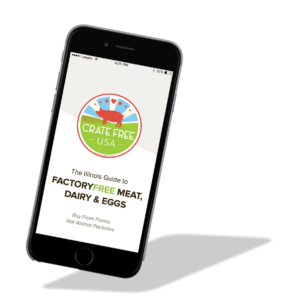
Just download our free mobile app and start exploring!
: : :
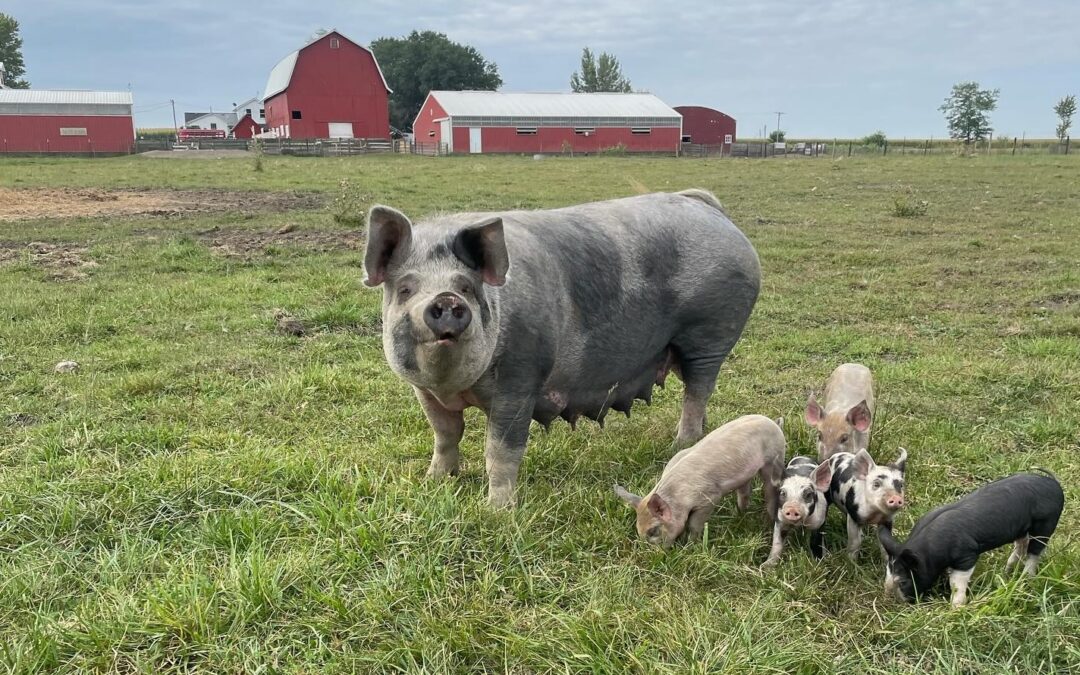
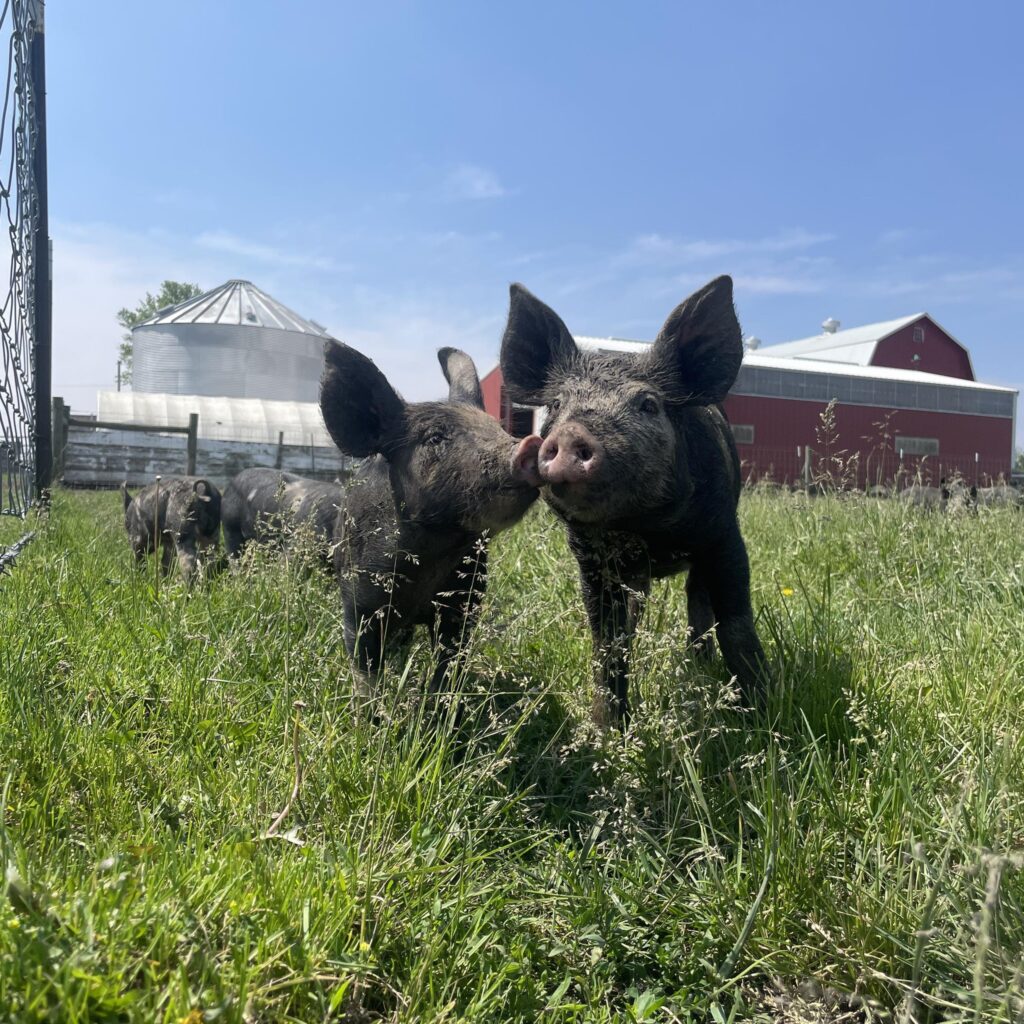
Located just 60 miles from Chicago in northern Illinois, Hasselmann Family Farm takes a pastoral, animal-first approach to farming. Their livestock live on open pasture, where they’re free to roam, mingle, and graze on a forage-based diet of green grass and legumes.
Across their 150-acre farm (and additional pasture sites), chickens, pigs, and cattle are raised without antibiotics, growth hormones, or animal by-products. Heritage laying hens roam freely over lush pasture, and Berkshire pigs are pasture-raised in a natural setting. Through sustainable practices like crop rotation and composting — and by growing and grinding their own non-GMO feed — they maintain close oversight of their animals’ health, welfare, and quality of life.
Tell us about your farm: (kind of animals? Rough size of farm? Cage-free? Pasture raised?)
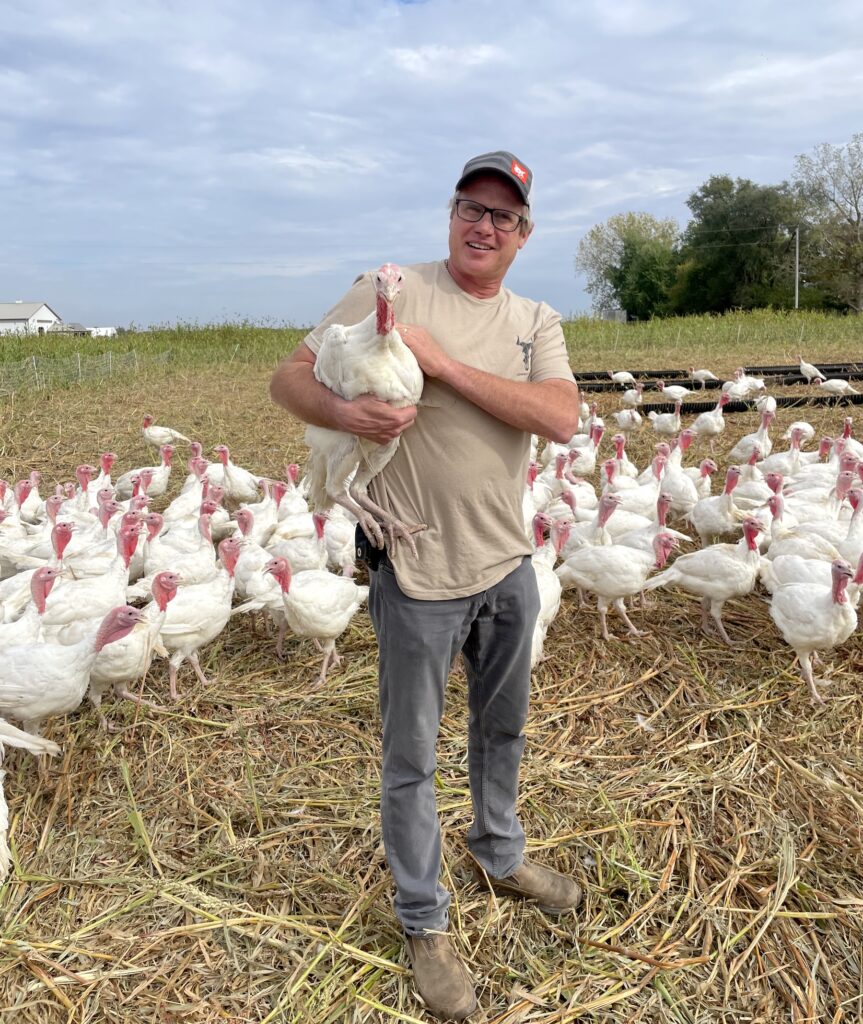
Our farm is 150 acres with 70 head of cattle, 30 lambs (both are grass-fed & finished), 1,000 laying hens, and 150 hogs. We have a cow-calf operation and a farrow-to-finish hog operation. We are a pasture-based operation. Not only that, but we also grow non-GMO crops to feed our hogs and chickens.
How did you first become involved in farming?
My family has farmed in the Chicago area since the 1880s. First in Des Plaines, Illinois, then in Elk Grove Village, Illinois and now in Marengo, IL. I grew up on my grandparents’ mushroom farm in Elk Grove, where I started raising rabbits, chickens, pigs, sheep, and goats. I was selling raw goat milk off the farm at 14 years old. I guess you can say it is just in the blood.
Why is farming sustainably and humanely important to you?
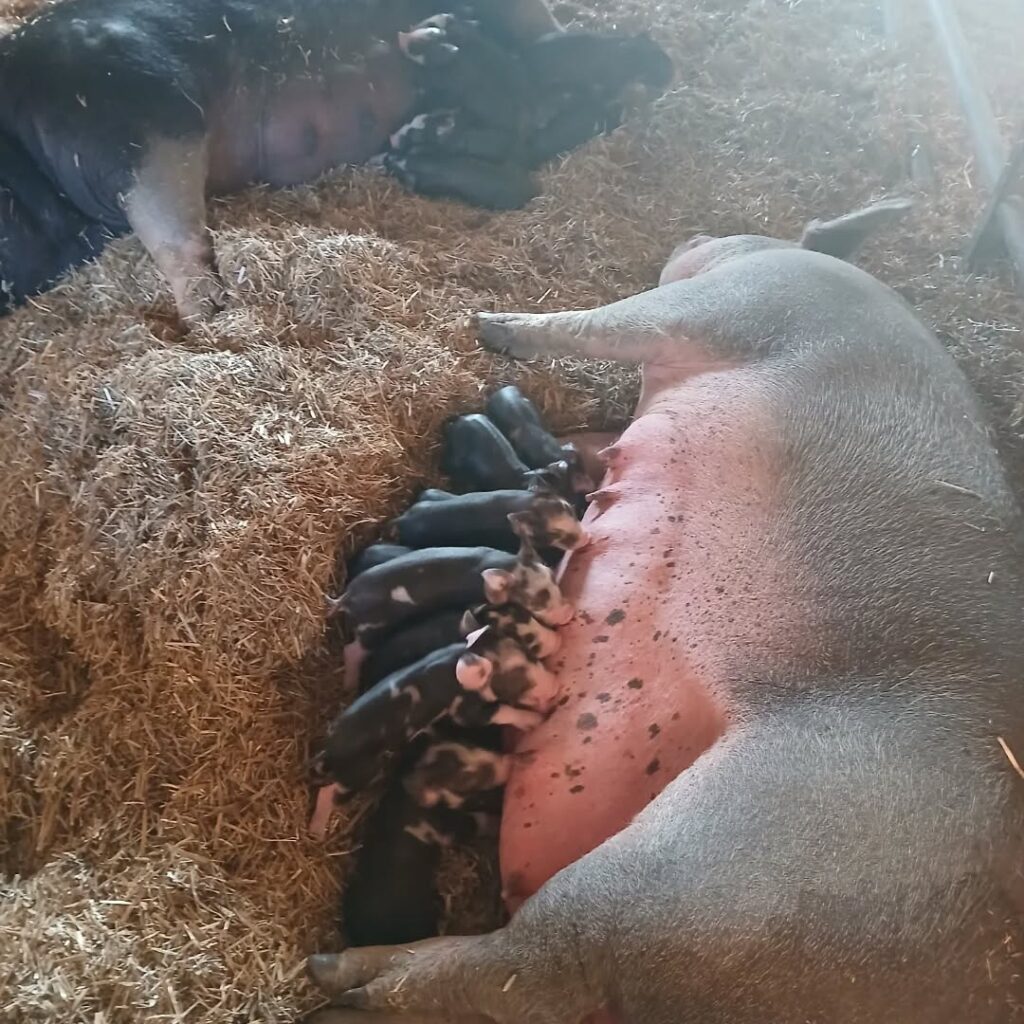
Humane, sustainable farming is important to me because, by farming humanely, we are allowing the livestock to thrive in a natural outdoor environment and express their natural instincts, like cattle grazing, pigs wallowing in the mud, and chickens scratching. The animals are born on our farm, we raise the food they eat, and the manure left behind is used to fertilize the crops, which are the end product used to nourish local families. It is a natural cycle and a beautiful thing.
How have the economics of farming changed in the last several years and how has it affected you? What further changes are you anticipating?
Specifically, in the beef sector, is where the economics have changed drastically. We have had the smallest cattle herd since the 1950s. Old ranchers are getting out now, while the cattle prices are high. Leaving us with a low herd and not enough heifers retained for replacements because they are so valuable. Which pushes consumers to lower-cost forms of protein like pork and poultry.
We are thankful to have a cow-calf operation, as it keeps us from buying expensive feeder cattle.
What are your views on extreme confinement and gestation crates for pigs?
It’s such a shame that the vast majority of pigs raised in this country cannot even run on pasture or wallow in the mud, or even be in the sunshine.
Would you support a bill to ban extreme confinement? Why or why not?
What a tricky question. No, there are just not enough farmers willing to do all the extra work of raising hogs outdoors, as sad as that may be. In addition, regulating farmers with a bill like this would put a ton of family farms out of business. The best choice is to let the consumer choose with their wallets.
What is your current slaughter process? What do you think about mobile abattoirs and is that something you would potentially use?
We use four different family-owned abattoirs, scattered throughout Illinois. Some are hundreds of miles from the farm. They do specialty cuts and cured products that would be hard for an abattoir to replace. We would potentially use a mobile abattoir if it could replicate the same quality of cutting and packaging that our current processors use.
What can consumers do to help improve the lives of all our farm animals? Is there anything else you’d like to share?
The most important thing a consumer can do is to buy from farms that raise their livestock on grass-based systems and to know their farmer and visit the farm itself, and see with their own eyes how the animals are being treated and cared for.
How do you market and sell your products? How can people shop with you/find you? Can they visit the farm?
We sell our products in our farm store. We are open every Monday and Wednesday, 9 am to 5 pm, and Saturday, 9 to 2 pm. We are also at the Palatine farmers market year-round. In addition, we have a home delivery service and deliver right to the customer’s door throughout Chicagoland. Orders can be placed online for pick-up or delivery.
Photos courtesy: Hasselmann Family Farm
The Illinois Guide to FACTORY- MEAT, DAIRY, & EGGS
As always, to find a local farm farm near you, please
download our app, The Illinois Guide to Factory-Free Meat, Dairy, and Eggs. Here you can buy direct from a local, sustainable farmer, not animal factories. Use the app to search for local farms, farmers markets, and restaurants that source humanely raised meat, dairy, and eggs.