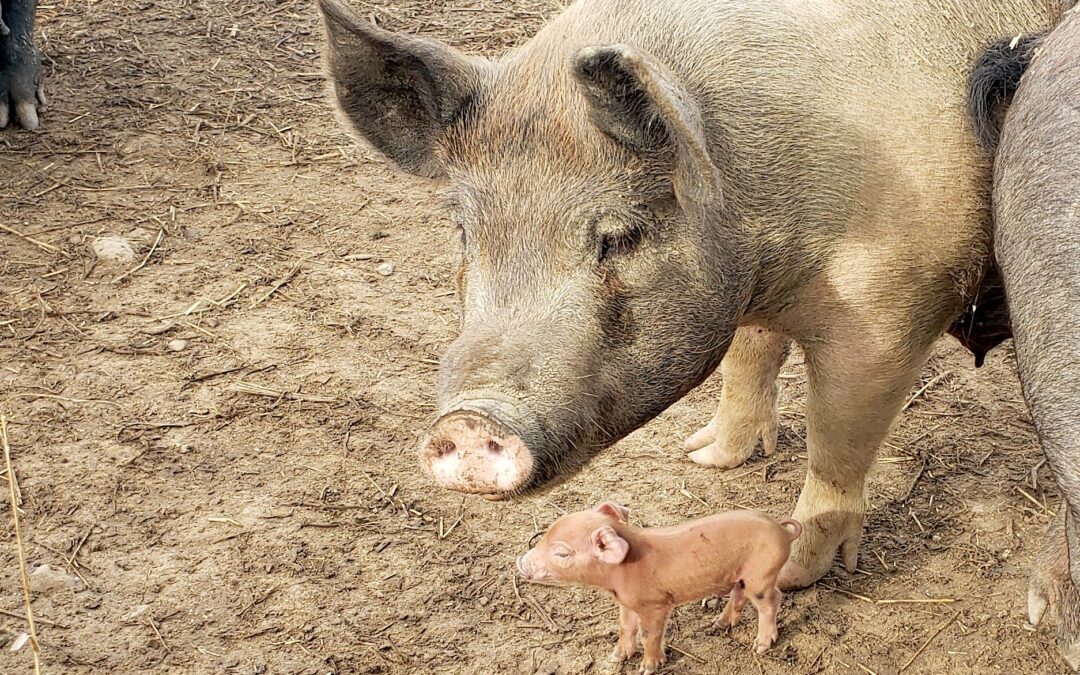
At Crate Free USA, we work to improve the lives of farmed animals by helping consumers make more informed food choices. Because most Americans continue to eat meat, we believe that supporting local farmers who prioritize animal welfare is one of the most effective ways to create change today. Farmers who pasture-raise their animals often provide their animals provide them with far better living conditions than the large industrial operations that dominate much of our food system.
While we encourage people to reduce their meat consumption, we also recognize the importance of supporting farmers who raise animals more humanely and sustainably. Progress doesn’t have to be all or nothing—every purchase is an opportunity to support a better food system.
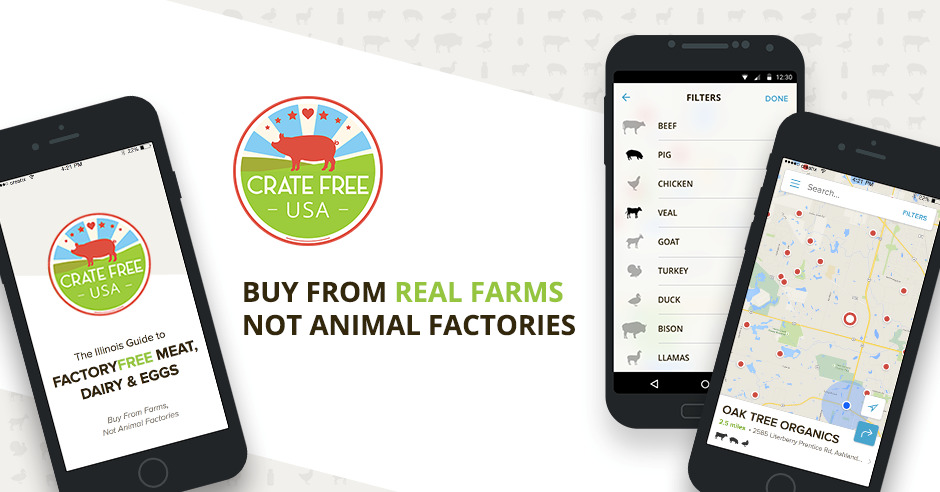
If you’re in or near Illinois, finding a local farmer who shares these values is easy. Download our free mobile app and discover more humane, sustainable farms near you.
At Gunthorp Farms, raising pigs means getting back to a more natural way of farming—one that puts animal welfare and the land at the center of the operation. For four generations, the Gunthorp family has raised pigs on pasture, giving them room to roam, root, forage, and enjoy the outdoors rather than confining them to crowded indoor facilities.
Their philosophy is simple: pasture, sunshine, fresh air, and the freedom for animals to express their natural behaviors. Today, Greg Gunthorp and his family continue that tradition, using thoughtful, regenerative farming practices to raise animals with minimal stress and care for the land they call home. It’s a different approach to pork production, one that recognizes that how animals are raised matters just as much as the food they ultimately provide.
Interview with Evan Gunthorp
Tell us about your farm.
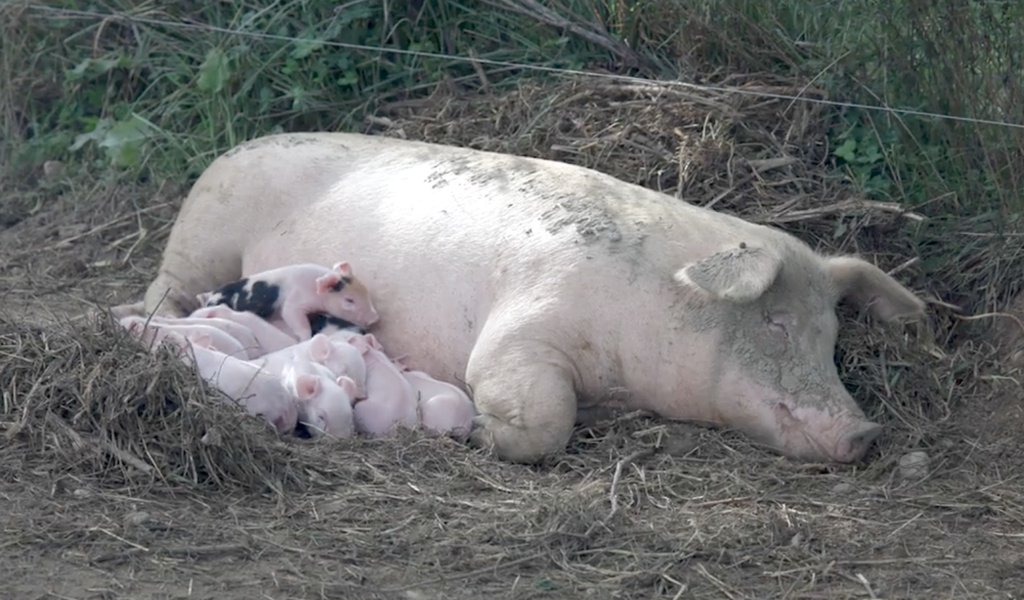
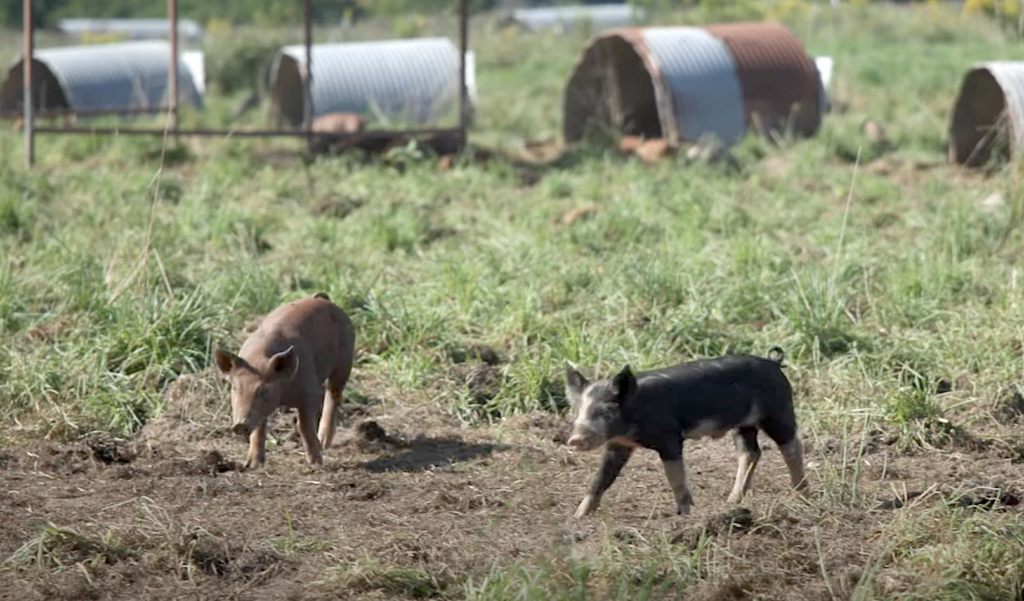
We are a pastured pig farm in Northeast Indiana with about 400 sows and 1,000 ewes. Our animals are raised 100% outdoors.
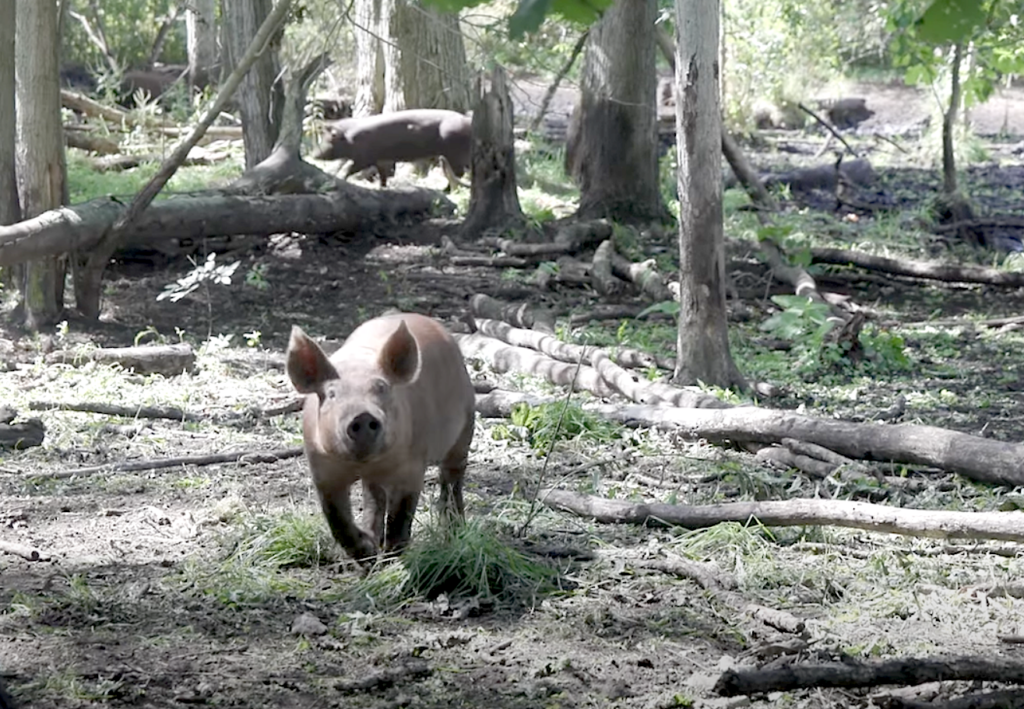
The pigs graze on our pastures in the summer and spend the cooler months in the woods. Our sheep graze solar sites through the growing season and return home to graze our stockpiled pastures over winter. We partner with other livestock owners to custom graze cattle over the growing season.
Our home-base is 240 acres, but we will partner with adjoining land owners to graze their hay fields and crop residue whenever the opportunity arises.
We also have our own USDA inspected processing plant on farm. We self-distribute our pork to universities, restaurants, retailers, and direct to consumer. We are Animal Welfare Approved by A Greener World on the farm and in the processing plant.
Watch our video tour of the farm here:
Why is farming sustainably and humanely important to the Gunthorp family?
Sustainable and humane have largely been prerequisites to our history in farming. Our family owns the majority of the property that we farm. And, since we live here; we would be the ones most negatively impacted by poor practices on this land. One season of poor practices can permanently scar the land. However, by stewarding this land on a daily basis, it can become a significantly more healthy, productive, valuable, and resilient resource for future generations.
Ultimately, we’re going to kill and eat the animals that we raise. For generations, our family has had to look the animals that end up in our freezers in the eyes. A pork chop from a pig that lived its life on green grass is far more appetizing than one from a pig that was raised in squalor. More importantly, when the day comes, it’s much easier to look that pig in the eye knowing that we did our absolute best to give it one good life and only one bad moment.
How have the economics of farming changed in the last several years and how has it affected you? What further changes are you anticipating?
The cost of nearly everything involved in farming has increased—land, labor, equipment, repairs, construction, transportation. Significantly so since 2020.
At the same time, consumers and chefs are under more pressure on food prices, so farmers can’t simply pass those increased costs along. That squeeze has pushed our business to look much different than it did prior to 2020.
We’ve streamlined our operations, ceasing poultry and several products that required a disproportionate amount of our attention. We pursue opportunities to approach economies of scale through higher volumes of fewer SKUs. We’ve pivoted into some revenue streams that aren’t directly tied to farming: increasing value added production in the plant, pushing fee-for-service processing, and starting prescribed grazing.
I expect economic pressure in farming to continue. I anticipate that we will pivot again, and hope that we have the knowledge and forsight to do so before economic factors force that change.
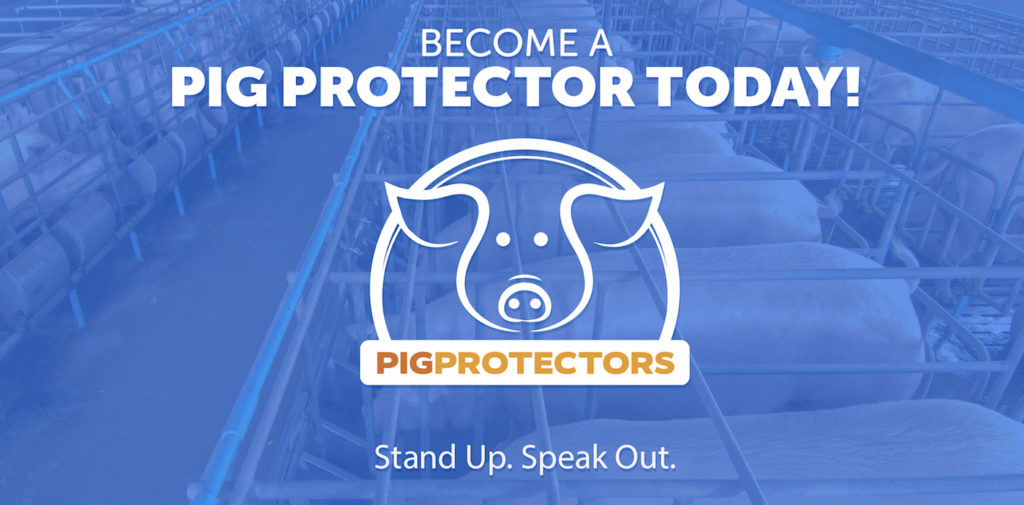
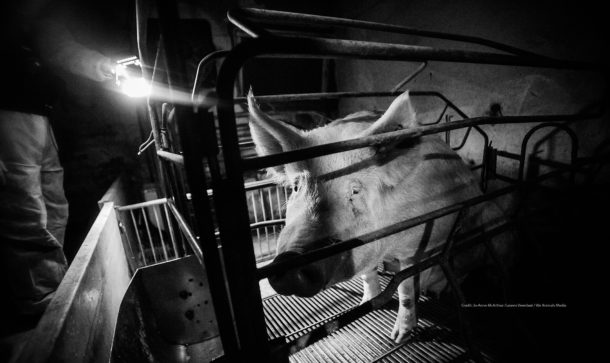
What are your views on extreme confinement and gestation crates for pigs?
I have no interest in being part of the confinement model.
I won’t put my pigs in crates.
I won’t be a customer of that system.
You don’t have to spend very much time with pigs outdoors to see that that is where they belong.
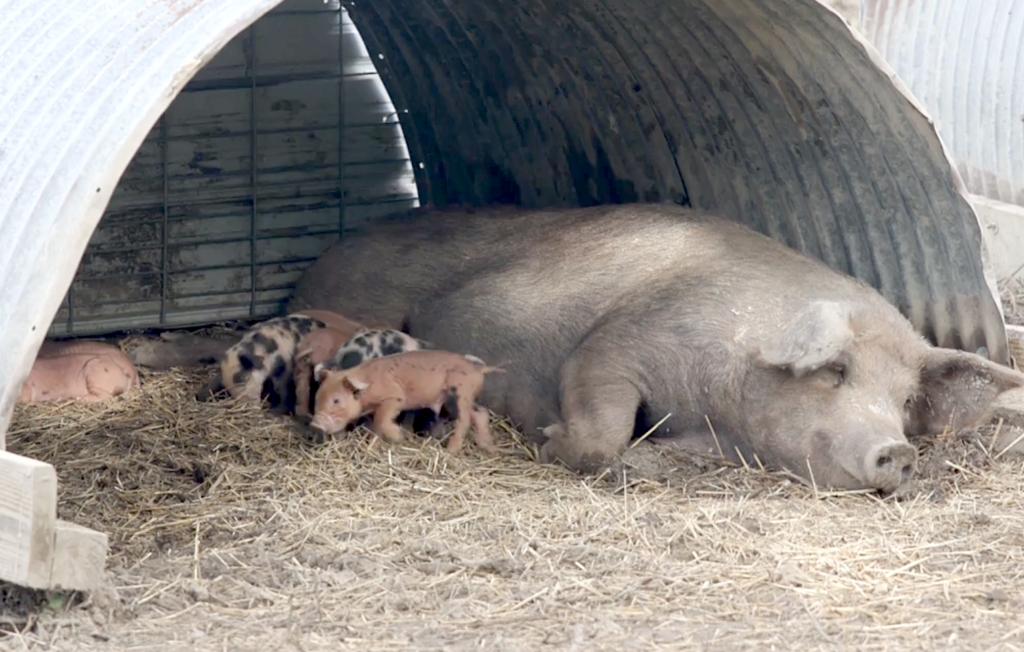
The way sows build nests to keep their young warm on the coldest winter nights; the way young pigs run and chase through the understory and around trees; the way sows interact with one another; the way they graze, forage, root, and hunt — it’s clear that pigs are meant to be outdoors.
Putting pigs in confinement is a clear contrast to the instincts and desires of the pig.
Would you support a bill to ban extreme confinement? Why or why not?
I would not. The modern confinement agricultural system accounts for an exceeding majority of the animals, meat, and demand in this country. Most Americans vote with their dollar every day to support that system. I don’t believe that it is the government’s role to prohibit practices that the majority unfortunately support.
Given proposition 12’s lackluster goal and mediocre efficacy, I believe that it’s misguided for anyone to put faith in government as the source of change in animal agriculture.
Consumers vote 365 days a year with their food dollar, and those votes are significantly more powerful than those that go on a ballot.
What is your current slaughter process and how does this differ from the vast majority of producers?
Alan Guebert describes the first rule of meatpacking as: “Put more blood on the floor faster and cheaper than any competitor.” I think that is an unfortunately accurate description of meat processing.
At the end of the day, meat processing is an often-overlooked, low-margin step between the farm and the consumer.
The job is fundamentally to kill animals and put them in plastic. In too many cases, the animals become little more than the raw material of the industry. Volume — more pounds, more pallets, more truck loads — becomes the ultimate goal with no consideration of the animals lives that it took to achieve that volume. The economics push for that mentaility. Even a very small processing plant costs millions of dollars to build today. Once you take on that kind of investment, the only way to make the economics work is to spread the overhead across enough pounds. More animals, more pounds, more throughput.
Our situation is different. We have bootstrapped our plant over more than two decades. We didn’t build a multimillion-dollar plant all at once, and we don’t operate it at the direction of a loan officer or investor demanding a certain return on that investment.
We operate a processing plant so that we can continue to raise pigs the way we believe they should be raised.
The plant is here to serve the farm, not the other way around, and we carry the farm’s ethos through the doors of the processing plant. Our pigs are born here, raised here, and when the time comes, they can walk from pasture into the plant.
The same team that cares for these pigs seven days a week is responsible for processing them. Processing isn’t just a matter of sending meat out the door for us. It is the culmination of a nearly year long process caring for that animal from conception to consumption.
What can consumers do to help improve the lives of all our farm animals? Is there anything else you’d like to share?
Consumers get the agriculture that they support.
The harsh reality is that farms like ours stand zero chance in the modern supply chain. To match the convenience of that pound of breakfast sausage you see in the grocery store would require that I charge 10X what they do. It would require additional equipment in the plant, third party audits on things like metal detection and recall procedures, a larger liability policy, additional packaging and labeling, more deliveries, more inventory management, and more labor at nearly every step.
The mainstream meat system is incredibly good at making meat cheap and convenient. It divides enormous fixed costs across enormous volumes. A semi load of pork is cheaper to move per pound than a few cases. A production line running the same item two shifts a day, six days a week is significantly cheaper than stopping and changing over every few hundred pounds. A retailer moving thousands of pounds a week can spread its overhead far more efficiently than a farm selling a few packages at a time.
We can’t beat that system at its own game, and consumers shouldn’t expect us to.
What we can do is work together to make a different system practical. That takes effort on both sides. We have to become better at producing, processing, packaging, and distributing food efficiently. Consumers have to be willing to plan ahead, buy differently, and sacrifice some convenience. The same economic principle that applies to a processing plant applies to buying meat: divide the cost and inconvenience over enough pounds to make it worthwhile.
It’s easy to buy the better product once in a while: local grassfed steaks for a monthly date night, an artisanal ham for Christmas, a pasture-raised turkey for Thanksgiving. While every dollar in support of a better system is a dollar well spent, the majority of livestock will not be impacted by better spending on special occasions. Consumers and farmers have to come together to replace staple items with better options.
That starts with knowing your farmer.
A label can tell you a few things, but it cannot tell you the whole story. Knowing who raised your food gives you the opportunity to ask how the animals live, what they eat, how they are handled, where they are processed, and why the farmer makes the choices they do. More importantly, it creates a relationship that goes beyond buying a premium product once a year.
The real opportunity is in the routine purchases: the ground pork, breakfast sausage, chops, bacon, roasts, and other products that end up on the table every day. If consumers can shift those purchases toward farms they know and trust, that is where agriculture begins to shift.
That may mean buying a freezer. It may mean buying a case at a time instead of two packages. It may mean splitting an order with family or neighbors, picking up less frequently, or being willing to accept fewer package sizes and product choices. Those small sacrifices in convenience help us spread the cost of processing, packaging, and distribution over enough pounds to make the system workable.
Farmers have to meet consumers halfway. We have to make better food as affordable and accessible as we reasonably can. But consumers also have to recognize that a different agricultural system cannot be built while buying food in exactly the same way the conventional system taught us to buy it.
Know your farmer, buy the foods you actually eat from them, and buy enough to make the relationship practical for both sides.
How do you market and sell your products? How can people shop with you/find you? Can they visit the farm?
We primarily sell pork wholesale to universities, restaurants, retailers, other farms, and distributors. We also sell directly to consumers for pickup at the farm or shipped via UPS.
People can learn more about us and purchase directly from us at gunthorpfarms.com.
We do our best to accommodate all visits, but we are an operational farm and can’t always have someone available for visitors. Call ahead if you would like to schedule a tour.
The Illinois Guide to FACTORY-FREE MEAT, DAIRY, & EGGS